

Bosnia and Herzegovina
The center of Yugoslavia's bloody breakup.
Here, the old exists with the new. Modern buildings alongside the centuries' old ones. Ottoman Turkish rule in Southern Europe lasted from the14th century to the Balkan Wars (1912-1913). So, it makes sense why their influence can be seen, felt, even tasted everywhere in Bosnia and Herzegovina. For example, the architecture seen in the bridges in Sarajevo and Visegrad, the clock towers in old town centers, the mosques (50% of the country is Muslim), and Bosnian coffee which is identical to Turkish coffee. Even Copper Smith Street in Sarajevo, where you can watch talented smiths tapping and stamping new creations, is a throwback to the old Ottoman days.
Post trip thoughts: It's a great place to visit, it was more developed than expected, and I want to go back. The food, coffee, and Turkish tea were all great. In Sarajevo, the side streets are especially narrow, but there's a good public transportation network. The towns I visited were small but they all had a big historic feeling. No matter where I went, there were constant reminders of past kingdoms, conflicts, and suffering. Hopefully this century will prove to be one of development and peace for the country and the Balkans.

Two Arabic poems on Mehmed Pasha Sokolovic Bridge, Visegrad.
Quick facts: Source: CIA World Factbook
Area:About the size of West Virginia
Population: 3.7 million
Ethnic groups: Bosniak 50.1%, Serb 30.8%, Croat 15.4%
Language: Official = Bosnian, Serbian, Croatian
Religion: Muslim 50.7%, Orthodox 30.7%, Roman Catholic 15.2%
Capital: Sarajevo
Admin Divisions: Brcko District, Federation of Bosnia and Herzegovina, Republic of Srpska
GDP Per Capita: $19,900
Currency: Mark ($1 = 1.80 Mark)
The Bosnian War (1992-1995): Yugoslavia began to dissolve in 1991. First, Slovenia and Croatia declared independence, and then Bosnia and Herzegovina held a referendum which confirmed the country's break with Yugoslavia (aka Serbia the dominant power and capital). Unlike the other former Yugoslav republics, Bosnia and Herzegovina was very multi-ethnic. The majority ethnic group is Bosnian Muslims, and the Bosnian Serbs (Orthodox Christians) and Bosnian Croats (Croatian Catholics) were the minorities. Here, religion/national identity seem to be identical. After living side by side for decades in peace, these 3 groups were going to spend the next 3 years committing ethnic cleansing, genocide, and war crimes against each other as they fight to carve up land in the country and make their own national enclave out of what used to be one country. They half way succeeded. Fighting mostly stopped in 1995 after NATO intervention and the signing of the Dayton Accords. Currently, more areas are mono-ethnic than before, and the country is effectively divided into 3 administrative regions, one for each ethnic/religious group. You are aware of this division, and scars of the war, everywhere you go here.
Bosnia and Herzegovina
The center of Yugoslavia's bloody breakup.

Trip Summary
Date: 20-30 September 2024
Route: Blue = Serbia, Red = Bosnia and Herzegovina
Map Source: Google Maps
26 = Visegrad (Bosnia and Herzegovina), bus to Sarajevo.
27 = Siege of Sarajevo Museum, Children's Museum, Sarajevo Free Walking Tour
28 = Day Tour: Ahmici, Travnik, Jajce, Water Mills in Mlincici
29 = Sarajevo Jewish Cemetery

Visegrad
Mehmed Pasha Sokolovic Bridge, Andrictown, Virgin Mary Church, Old Railway Station
This small city is just across the border from Serbia. It's original claim to fame is the Mehmed Pasha Sokolovic Bridge; one of the best preserved Ottoman Turk bridges. Completed in 1577, it's magnificent, but looks slightly out of place in this tiny city. Now a days, Visegrad is promoted as Nobel Prize winner Ivo Andric's hometown (He was ethnically Serbian). Sadly, it's also the location of a human rights case before the United Nations ICTY for the murder of Muslim Bosnians during the civil war.


The Virgin Mary Church, Serbian Orthodox, is very normal on the interior, but outside directly next to the church you notice a special cemetery. This is not a burial place for just anyone, it's a final resting place for the "heroes" who were killed during the civil war (Bosnian War 1992-1995). This small town also has several historic mosques which were destroyed during the war and rebuilt later. These mosques are open to the public, but they were empty inside, unattended, and you won't see any Bosnian Muslims strolling around town. It seems the ethnic conflict in Visegrad had the desired effect. This was my first stop in Bosnia and Herzegovina, but this wouldn't be the last war memorial. Memorials to those killed in the Bosnian War were in every place I visited.
Andrictown is a new complex of post-Bosnian War (1992-1995) buildings dedicated to Yugoslavia's famous Nobel Prize winner Ivo Andric. He lived here during his formative years, wrote a book called The Bridge on the Drina, and he later self-identified as Serbian (just like the majority of Visegrad's residents). However, Ivo was actually born near Travnik, a predominantly Bosnian Muslim area, to Croatian Catholic parents. To an outside observer, it seems like the people in this area killed or forced out the Bosnian Muslim people during the civil war, and now it's time to erase the cultural memory of this being an Ottoman and Bosnian Muslim place historically. Finally, Ivo Andrec was a Yugoslavian, not a Serb nationalist, but I sense the process of rewriting history is afoot.....
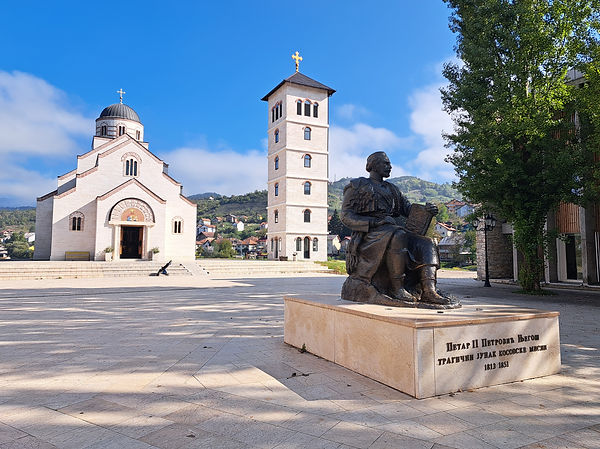

Mehmed Pasha Sokolovic was a powerful man in his time after becoming the 35th Grand Vizier of the Ottoman Empire (similar to a modern Prime Minister). He was born in1505, in Bosnia, to Christian parents and taken away to be converted to Islam and serve the Ottoman Sultan in Constantinople. He rose through the ranks, reached the zenith of power, and was promptly assassinated after Sultan Selim's death. This tax where Christians parents were forced to occasionally give their "child" to serve the Ottoman Sultan was called the Devshirme. The process involved circumcision, conversion to Islam, becoming imperial soldiers or administrators and never returning home. In Sunni Islam, the Sultan was like the roles of Caesar and the Pope combined.


Sarajevo
Old Town, Latin Bridge, Copper Street, Siege of Sarajevo Museum, War Childhood Museum, Jewish Cemetery
Every major European city has a free walking tour. These tours are guided by locals or very enthusiastic expats. They always hit the famous places while answering questions and giving historical tidbits, facts, and stories to make the history of the area come alive. I did the 3PM Sarajevo City Tour. Copper Smith Street was my favorite stop. We were taken to a shop where a young man sits with hammer and anvil in hand stamping out copper creations and teaching us about his craft.

Cats posing at the mosque near my hotel.

The Latin Bridge: On June 28, 1914 Archduke Franz Ferdinand, next in line to the Austrian-Hungarian throne, was assassinated along with his wife. They were murdered just on the far side of this short bridge. The assassin was Serb nationalist Gavrilo Princip. The poor decision making that led to this event is well known, and you can click here to learn more.1 month later, on July 28, 1914, Austria-Hungary declared war on Serbia putting into action the chain of events that caused the First World War. On a side note, in Visegrad, there is a mural featuring Gavrilo Princip, among other historical figures, on the side of a new building in Andrictown. The Balkan animosity between Catholic Croats, Orthodox Serbs, and Bosnian Muslims really does echo through history...
Jewish Cemetery: After Prague, this is the second largest Jewish cemetery in Europe. It opened in 1630 but was razed under Nazi occupation in 1941 when important historical documents were destroyed. There are different types of tombstones here. The most intriguing being these massive, triangular shaped stones with deep Hebrew inscriptions. A newer addition to the cemetery is a 1952 monument to the victims of fascist terror. Specifically noted is the Jasenovac concentration camp, which was built just across the border in Croatia. The camp at Jasenovac was known for being run by Catholic Croatians and its victims were killed one by one using primitive weapons and guns only. Between 77,000 to 99,000 Serbs, Jews, Roma, and others were killed here.


Ahmici
Ahmici Massacre
To save time, I booked a Meet Bosnia day trip to Travnik and Jajce. The guide was a local Bosnian man, and our first stop was the site of an ethnic cleansing of Bosnian Muslims, by Croat Catholics. The testimony of a survivor, Abdulah Ahmic, can be read here. In April 16, 1993, the attack began. His father and other family members were murdered in their home in front of him, and he survived a gunshot to the head. Mr. Ahmic went through my near death experiences after this to try and hide from the soldier's but he was discovered and almost blown up and burned to death, but he finally managed to reach a collection point, get to the Red Cross, and be interviewed by reporters, where he learned that his mother and 3 sisters had already been murdered in Ahmici. 116 people were murdered that day. Meanwhile in the village of Trusina, on the same exact day 60 miles away, 15 Croat civilians and 7 POWs were killed by Bosnian Army troops. In both instances, neighbors were involved in helping perpetrate these crimes against humanity. You can learn more about both of these tragic events here.

Picture outside the rebuilt mosque.
Travnik
Travnik Fortress, Downtown, Ornamented Mosque
Overall, this is a lovely city. Travnik has an old fort, beautiful mosques, a clock tower, a nice pedestrian walking street, etc. Also, the birthplace of Nobel Prize winner Ivo Andric is near to here. Located almost directly in the center of the country, this predominantly Bosnian Muslim city acted as the Ottoman administrative Capital for a while in the 18th century. But, the city hasn't grown much since then and has a population of roughly 15 thousand people.


Jajce
St. Mary's Church, Fortress, Pliva Waterfall, Mlincici
As you can see in the photo, this hilltop fortress has a skeleton of an old church sitting below, and it was going to rain...This fort was the capital of the Kingdom of Bosnia (1377-1463). Unfortunately for them, the last king was executed by the Ottomans in 1463. Bosnia would not be independent again until after the destruction of Yugoslavia in the Bosnian War (1992-1995). There were memorials to Bosnian Muslims and Catholic Croats killed during the war right by the restaurants and shops in town.


St. Mary's Church: The sheer size and magnitude of the thick walls and tall bell tower, standing old and weathered but still tall, grabbed my curiosity. Of all the wars over the past few hundred years, which one claimed her? The most recent (Bosnian War 1992-1995), the largest in history (WW2 1941-1945), the war that created the Kingdom of Yugoslavia (WW1 1914-1918), of the wars that severed the Balkans from the Ottoman Turks (The Balkan Wars 1911-1913)? Something even earlier than this? I had to do some research to find the answer. The last king of Serbia was crowned here in 1461. St. Mary's Church was converted to a mosque in 1528, and caught fire several times before being burnt for the last time in 1832, as it remains today.


